 Khan Nasir
The core difference is simple: cloud computing processes your data in large, distant data centers, while edge computing processes it close to where the data is created. Cloud gives you near-unlimited power and storage; edge gives you speed and reliability by cutting the round trip to a faraway server.
Also Read


They are not rivals so much as partners. Most modern systems use both — the cloud for heavy lifting and long-term storage, the edge for instant, local decisions. This guide explains what each one does, when to use which, and why the smartest setups combine them.
Key takeaways
- Cloud computing centralizes power in remote data centers — huge scale, but every request travels a distance.
- Edge computing pushes processing near the source — lower latency and less bandwidth used.
- Use the cloud for storage, analytics, and workloads that are not time-critical.
- Use the edge when milliseconds matter: self-driving cars, factory sensors, live video.
- The best architectures blend both, letting each handle what it does best.
- Edge does not replace the cloud; it extends the cloud closer to the real world.
What is cloud computing?
Cloud computing means renting computing power, storage, and software over the internet instead of owning it yourself. Providers run massive data centers, and you use exactly what you need, when you need it.
When you stream a show, back up your phone, or use an online app, you are using the cloud. Your device sends a request to a data center, which does the work and sends the result back.
The strengths are scale and flexibility. You can spin up enormous resources in minutes and pay only for what you use. If you are new to the idea, our explainer on what cloud hosting is covers the basics in plain language.
The trade-off is distance. Every request has to travel to the data center and back, and that round trip takes time.
What is edge computing?
Edge computing flips the model. Instead of sending all data to a distant center, it processes data at or near the place where the data is generated — the “edge” of the network.
That edge might be a sensor on a factory line, a smart camera, a car, or a small local server in a store. The point is to make decisions locally, without waiting on a far-off cloud.
By handling data on the spot, edge computing slashes delay and reduces how much data has to travel across the internet. Only the important results get sent onward, if they need to be sent at all.

Edge computing vs cloud computing: the core difference
Boil it down and the whole comparison rests on one word: location.
Cloud computing centralizes. It gathers everything in a few powerful locations and processes it there. This makes it incredibly capable but adds distance.
Edge computing distributes. It spreads small amounts of processing across many nearby points, trading raw power for speed and independence.
Neither is “better.” They optimize for different things — the cloud for scale, the edge for immediacy.
A simple analogy to make it click
Imagine a restaurant chain. The central kitchen is the cloud: it has every ingredient, industrial equipment, and huge capacity, but it is across town.
A food truck parked on your street is the edge. It cannot do everything the central kitchen can, but it hands you a meal in seconds because it is right there.
For a big catering order, you want the central kitchen. For a quick snack right now, the food truck wins. Smart operations use both, and so do smart computing systems.
How latency separates the two
Latency is the delay between a request and a response. For the cloud, that delay includes the trip to a data center that might be hundreds or thousands of miles away.
Usually that is fine. A few hundred milliseconds does not matter when you are loading a web page or saving a file.
But some tasks cannot wait. A self-driving car deciding whether to brake, or a robotic arm avoiding a collision, needs an answer in a millisecond or two. Sending that data to the cloud and back is far too slow.
That is the gap edge computing fills. By processing locally, it removes the round trip entirely.
When should you use cloud computing?
The cloud is the right home for the bulk of modern workloads.
- Storage and backups of large amounts of data.
- Heavy analytics and training of machine learning models.
- Websites and apps that serve users everywhere.
- Anything not time-critical, where a small delay is invisible.
If your task benefits from massive, on-demand power and does not live or die on milliseconds, the cloud is almost always the answer.
When should you use edge computing?
Edge computing earns its place whenever speed, reliability, or bandwidth is the constraint.
- Real-time control: autonomous vehicles, industrial robots, medical devices.
- Remote or unstable connections: oil rigs, ships, rural sites where the cloud may be unreachable.
- Bandwidth-heavy data: live video analysis, where sending every frame to the cloud is wasteful.
- Privacy-sensitive data that is safer processed locally than shipped across the internet.
In these cases, the edge is not a nice-to-have. It is the only setup that works.
Real-world examples of edge computing
Edge computing is already all around you, often invisibly.
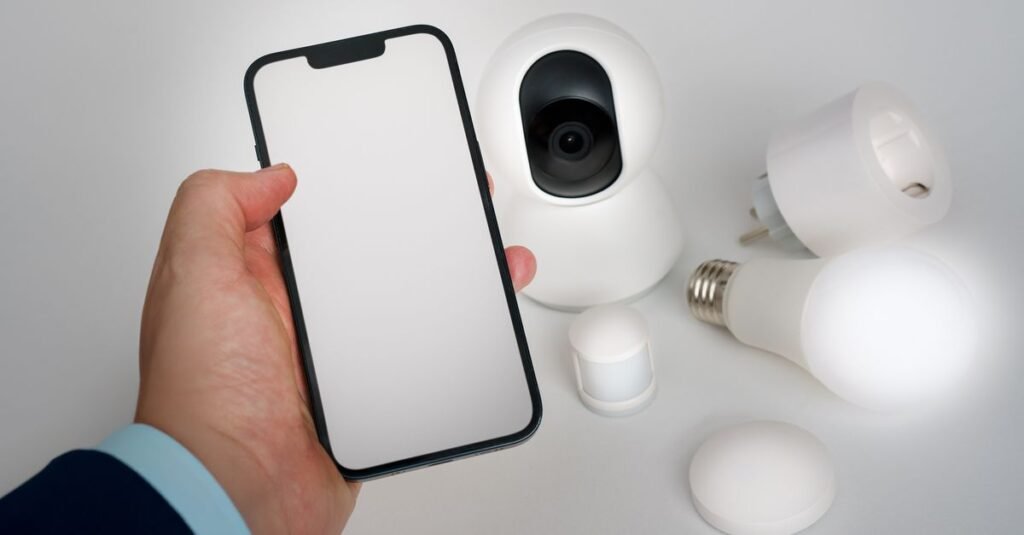
Smart homes process voice commands and camera motion locally for faster, more private responses.
Factories use edge devices to monitor machines and catch faults instantly, before a small problem becomes a shutdown.
Retail stores analyze foot traffic and inventory on-site, sending only summaries to the cloud.
Content networks cache popular files near users, which is a form of edge delivery. Our guide to what a CDN is shows how that speeds up the sites you visit every day.
Do edge and cloud compete or work together?
They work together far more than they compete. The dominant pattern in 2026 is a partnership, not a contest.
A typical flow looks like this: edge devices collect and filter data in real time, act on anything urgent, and then send the important pieces to the cloud for storage, deep analysis, and long-term learning.
The cloud, in turn, trains smarter models and pushes updates back out to the edge. Each side makes the other better.
Think of the edge as the cloud’s reflexes and the cloud as the edge’s memory and brainpower.
What about cost?
Cost works differently for each model, and neither is automatically cheaper.
Cloud costs are mostly ongoing: you pay for compute, storage, and the bandwidth of moving data in and out. Heavy data transfer can add up quickly.
Edge costs lean toward upfront hardware: the devices and local servers you deploy. But by processing locally, the edge can cut bandwidth bills and reduce cloud usage.
For data-heavy, real-time systems, a hybrid approach often lands at the lowest total cost, because you only send the cloud what truly needs to go there.
Security: edge vs cloud
Security cuts both ways, and each model has a different profile.
The cloud concentrates data in a few heavily protected locations run by teams of specialists. That expertise is a real advantage, but a central store is also a bigger target.
The edge spreads data across many devices, so a single breach exposes less. But securing hundreds of small devices in the field is harder than locking down a few data centers.
Neither wins outright. Strong systems apply solid security at both layers rather than trusting one to cover the other.
Where do you actually run cloud workloads?
For most businesses and developers, “using the cloud” means renting managed cloud infrastructure rather than building your own data center.
Managed platforms make this approachable. Instead of configuring raw cloud servers, you launch sites and apps on a simple dashboard while the platform handles the heavy server work. A managed host like Cloudways runs your workloads on top of major cloud providers, giving you cloud power without cloud complexity.
If you are deciding how to host an application specifically, our comparison of serverless vs traditional hosting and our roundup of the best cloud computing platforms will help you choose the right foundation.
The role of 5G and the future of edge
Edge computing and 5G are a natural pair. Faster, lower-latency mobile networks make it practical to connect huge numbers of edge devices and move data between them quickly.
As 5G networks expand, expect more processing to shift toward the edge, especially for smart cities, connected vehicles, and augmented reality.
The long-term picture is not “edge or cloud” but a smooth continuum, with computing happening at whatever point makes the most sense for each task.
Common myths about edge computing
Edge computing attracts a few misconceptions worth clearing up.
Myth: the edge will replace the cloud. It will not. The edge handles fast local tasks while the cloud handles scale and storage. They complement each other.
Myth: edge computing is only for huge companies. Small businesses already use it through smart devices, local servers, and content delivery networks, often without realizing it.
Myth: the edge is always cheaper. It can reduce bandwidth costs, but it adds hardware and management. The savings depend on your specific workload.
Seeing past these myths helps you judge where the edge genuinely helps and where the cloud is still the better home.
How edge computing powers AI
One of the fastest-growing uses of edge computing is running artificial intelligence close to the data.
Instead of sending every camera frame or sensor reading to the cloud for analysis, an edge device can run a trained model on the spot. That means instant decisions, even with no internet connection.
This edge AI powers things like smart cameras that recognize objects, factory systems that spot defects in real time, and wearables that monitor health locally for privacy.
The cloud still trains the models, but the edge is increasingly where they run. It is a clear example of the two working as a team.
How to get started with edge computing
You do not need a research lab to explore edge computing.
Start by identifying a task that needs speed or has to keep working with unreliable connectivity. That is where the edge earns its keep.
Many cloud providers now offer edge services that extend their platforms closer to users, so you can experiment without buying hardware. Pair that with a solid cloud host for the heavy lifting, and you have a practical hybrid setup.
Begin small, measure the improvement in latency or cost, and expand from there.
The bottom line
Cloud computing and edge computing solve different problems. The cloud offers vast, flexible power at a distance. The edge offers instant, local processing where speed and reliability matter most.
For everyday storage, websites, and analytics, the cloud is your workhorse. For real-time, bandwidth-heavy, or connection-sensitive tasks, the edge is essential. And for a growing number of systems, the winning move is to use both, letting each do what it does best.
Understanding the difference helps you design faster, cheaper, and more resilient technology — whether you are building a product or just making sense of the world around you.
Frequently Asked Questions
Is edge computing replacing cloud computing?
No. Edge computing extends the cloud rather than replacing it. The edge handles fast, local processing, while the cloud handles heavy computation, storage, and long-term analysis. Most modern systems use both together, with each layer doing what it does best.
What is the main advantage of edge computing?
Speed. By processing data close to where it is created, edge computing removes the round trip to a distant data center, cutting latency to milliseconds. It also reduces bandwidth use and can keep working even when the connection to the cloud is weak or unavailable.
Is edge computing more secure than cloud computing?
It depends. The edge spreads data across many devices, so a single breach exposes less, and sensitive data can stay local. But securing many field devices is harder than protecting a few data centers. The strongest approach applies robust security at both the edge and the cloud.
What are common examples of edge computing?
Self-driving cars, smart home devices, industrial sensors, in-store analytics, and live video processing are all common examples. Content delivery networks that cache files near users are also a form of edge computing, which is why nearby servers make websites load faster.
Do I need edge computing for my website?
Most websites do not need dedicated edge infrastructure, but they already benefit from edge-style delivery through a CDN. If your site is not real-time or sensor-driven, a solid cloud host plus a CDN gives you speed without the complexity of a full edge deployment.
How do 5G and edge computing relate?
5G provides the fast, low-latency connectivity that makes large-scale edge computing practical. Together they enable applications like connected vehicles, smart cities, and augmented reality, where huge numbers of devices need to process and exchange data almost instantly.
What industries benefit most from edge computing?
Manufacturing, healthcare, retail, transportation, and energy see the biggest gains. These fields rely on real-time data from sensors, cameras, and machines, where the split-second speed of local processing prevents costly delays and keeps critical systems running even when the link to the cloud drops.
Is edge computing the same as a CDN?
Not exactly, but they are related. A content delivery network caches and serves files from servers near users, which is one form of edge delivery. Full edge computing goes further, actually processing data and running applications at those nearby locations rather than only storing and serving files.

 Khan Nasir