 Khan Nasir
Choose Redis if you need a versatile in-memory data store with rich features, persistence, and advanced data types, and choose Memcached if you want the simplest, fastest cache for plain key-value data. Both keep data in memory to make applications dramatically faster, but Redis does far more while Memcached does one thing extremely well.
Also Read


They are the two most popular in-memory stores, and picking between them shapes how your app caches data and scales. This guide compares them across features, performance, and use cases so you can choose with confidence.
Key takeaways
- Redis is a feature-rich in-memory data store with many data types, persistence, and built-in replication.
- Memcached is a simple, high-speed cache for basic key-value data.
- Choose Redis for versatility: queues, leaderboards, sessions, pub/sub, and more.
- Choose Memcached for straightforward caching where simplicity and raw speed win.
- Both store data in memory, so they are far faster than disk-based databases.
- Redis is the more common default today, but Memcached still shines for pure caching.
What is Redis?
Redis is an open-source, in-memory data store that keeps information in RAM for extremely fast access. It is often used as a cache, but it is much more than that.
Redis supports many data structures, including strings, lists, hashes, sets, and sorted sets. It can also persist data to disk, replicate across servers, and handle messaging through pub/sub.
This versatility is why Redis powers everything from caching and session storage to leaderboards, queues, and real-time analytics.
What is Memcached?
Memcached is an open-source, in-memory caching system designed to do one job very well: store simple key-value pairs and serve them fast.
It keeps frequently accessed data, like database query results or rendered page fragments, in memory so your app avoids slow repeated work.
Memcached is deliberately minimal. It does not persist data or offer complex data types, and that simplicity is exactly its appeal for pure caching.

Redis vs Memcached: the core difference
The heart of the comparison is scope. Memcached is a specialist; Redis is a generalist.
Memcached focuses purely on caching simple data as fast as possible. If that is all you need, its simplicity is a genuine strength.
Redis does caching too, but adds rich data types, persistence, replication, and messaging. It is a toolbox rather than a single tool, which makes it the more flexible choice for most modern apps.
Data types compared
This is where the two differ most clearly.
Memcached stores strings only. You save a value under a key and retrieve it later, which is perfect for straightforward caching.
Redis supports strings plus lists, sets, sorted sets, hashes, bitmaps, and more. These structures let you build features like queues and leaderboards directly in Redis, without extra tooling.
Does the data survive a restart?
Persistence is a major practical difference.
Memcached keeps everything in memory only. If it restarts, the cached data is gone, which is fine for a cache but not for anything you need to keep.
Redis can save data to disk, so it can recover its contents after a restart. That makes Redis usable as a lightweight database or a durable store, not just a temporary cache.
Performance: which is faster?
Both are blazingly fast because they work in memory, and for simple caching the difference is small.
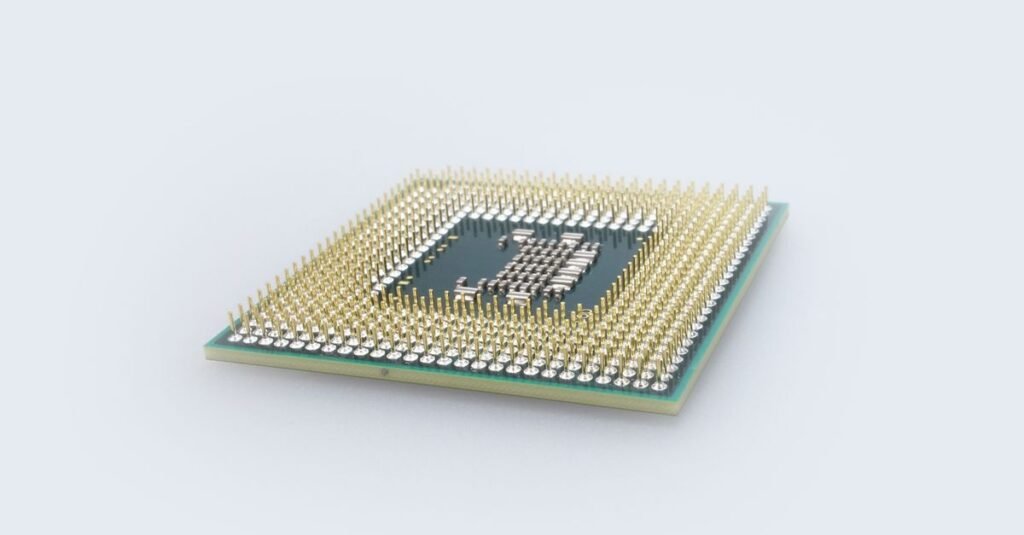
Memcached uses a multithreaded design, so it can make excellent use of multiple CPU cores for large volumes of simple reads and writes.
Redis is traditionally single-threaded for its core operations, which is extremely fast and predictable, and newer versions add threading for some tasks. For most workloads, both are fast enough that features, not raw speed, decide the winner.
Scalability and clustering
Both scale, but Redis offers more built-in tools.
Redis includes replication, automatic failover, and clustering to spread data across many servers, which helps with high availability and growth.
Memcached scales by adding more servers and distributing keys across them, a simple and effective model, though it lacks Redis’s built-in replication and failover.
Memory efficiency
Memcached is often praised for handling large amounts of simple cached data efficiently.
Its straightforward design uses memory predictably for basic key-value storage. Redis uses more memory for its richer features, but offers fine control and efficient structures when used well.
For huge volumes of simple cache entries, Memcached can have an edge; for varied data, Redis’s structures often save effort overall.

Common use cases for Redis
Redis fits a wide range of jobs beyond caching.
- Session storage for web apps.
- Real-time leaderboards using sorted sets.
- Message queues and background job processing.
- Pub/sub messaging for real-time features.
- Rate limiting and counters.
If your app needs any of these, Redis handles them natively.
Common use cases for Memcached
Memcached excels when caching is all you need.
- Caching database query results to reduce load.
- Storing rendered page fragments for faster delivery.
- Simple session caching where persistence is not required.
For these focused jobs, Memcached’s simplicity is a real advantage.
Which should you choose?
Let your needs decide, and default to Redis when unsure.
Choose Redis if you want flexibility, advanced data types, persistence, or features like queues and pub/sub. It is the more capable, future-proof choice for most applications.
Choose Memcached if you need pure, simple caching at scale and value minimalism. When caching plain data is the whole job, its focus pays off. If you are still mapping your data needs, our guide to SQL vs NoSQL databases helps.

How they fit with your main database
Neither Redis nor Memcached usually replaces your primary database. They sit in front of it.
Your main database stores the authoritative data, while Redis or Memcached caches the hot, frequently requested pieces in memory. That cuts load on your database and speeds up responses.
Understanding how caching works helps you use either tool well, and both pair naturally with the databases in our complete guide to databases.
Where to run Redis or Memcached
Both need a server, and your choice of hosting affects performance.
Many managed hosts make caching easy. A platform like Cloudways offers built-in Redis on its managed servers, while Hostinger supports caching on its plans. Managed caching saves you the work of running and securing it yourself.
Why does in-memory storage make things so fast?
Speed is the whole point of Redis and Memcached, and it comes from where the data lives.
Reading from memory (RAM) is dramatically faster than reading from a disk, even a fast SSD. By keeping hot data in memory, these tools answer in microseconds instead of milliseconds.
That difference is enormous at scale. Serving a cached value from memory can be hundreds of times faster than recomputing it or fetching it from a disk-based database.
What is cache invalidation?
Cache invalidation is deciding when cached data is stale and should be refreshed. It is famously one of the trickier problems in computing.
If you cache a value too long, users see outdated information. If you refresh too often, you lose the speed benefit. The art is setting sensible expiry times for each kind of data.
Both Redis and Memcached let you set time-to-live values on entries, so cached data expires automatically. Planning this well is key to a healthy cache.
How does Redis persistence work?
Persistence is what lets Redis survive a restart, and it offers two main methods.
Snapshots save the whole dataset to disk at intervals, which is compact and fast to restore. An append-only log records every write, giving stronger durability at the cost of larger files.
You can use either, both, or neither depending on how important the data is. Memcached, by contrast, offers no persistence at all, keeping everything in memory only.
Can you use Redis and Memcached together?
Yes, though most projects pick one. Some large systems use both for different jobs.
A team might use Memcached for simple, high-volume page caching and Redis for features that need data structures, like queues or leaderboards.
Running both adds complexity, so it is worth doing only when each earns its place. For most apps, a single well-chosen tool is simpler and enough.
What makes Redis good for real-time apps?
Redis is a favorite for real-time features because it is fast and feature-rich.
Its pub/sub messaging lets parts of an app communicate instantly, powering live chat and notifications. Sorted sets make real-time leaderboards trivial, and counters handle live metrics.
Because all of this happens in memory, updates feel instantaneous. That combination of speed and built-in structures is hard to match.
How much memory do you need?
Since these tools store data in RAM, memory is your main constraint and cost.
Estimate the size of the data you want to cache, then add headroom for overhead and growth. Caching a subset of hot data is often far more efficient than trying to cache everything.
Both tools let you set memory limits and eviction policies, so when memory fills up, the least useful entries are removed automatically to make room.
Do modern Redis features change the comparison?
They do. Redis has grown well beyond simple caching in recent years.
Extensions add support for JSON documents, full-text search, and even vector similarity search, which connects it to the world of AI applications covered in our guide to vector databases.
These capabilities widen the gap with Memcached for teams that want one tool to do more. If you only need plain caching, though, that extra power may be unnecessary.
Is Redis or Memcached better for session storage?
Both handle web session storage well, but Redis has an edge for most cases.
Because Redis can persist data, sessions can survive a restart, and its data structures make storing richer session information easy. Memcached works fine for simple, disposable sessions where losing them on restart is acceptable.
If keeping users logged in through a server restart matters, Redis is the safer choice.
What languages and frameworks support them?
Both tools are supported almost everywhere, which is part of their popularity.
Client libraries exist for every major language, including Python, JavaScript, PHP, Java, Go, and Ruby. Popular frameworks often include built-in support for using them as a cache or session store.
This broad support means you can add either to almost any stack with minimal friction, whatever your technology choices.
Common caching mistakes to avoid
A cache is powerful but easy to misuse.
- Caching everything, including data that changes constantly, which serves stale results.
- Setting no expiry, so old data lingers far too long.
- Ignoring memory limits, which can cause unexpected evictions or errors.
- Caching sensitive data without proper security.
Thoughtful expiry times and clear rules about what to cache prevent most problems.
How do you monitor a cache?
Watching your cache keeps it healthy and effective.
The key metric is the hit rate, the share of requests answered from cache. A high hit rate means the cache is doing its job; a low one suggests poor settings or the wrong data being cached.
Both Redis and Memcached expose statistics, and managed hosting often adds dashboards, so you can tune expiry and memory based on real usage rather than guesswork.
The bottom line
Redis is the more powerful and versatile choice, and it is the right default for most modern applications thanks to its rich data types, persistence, and built-in scaling features.
Memcached remains an excellent, focused tool for pure key-value caching at scale, where its simplicity and multithreaded speed shine. Match the tool to your workload, and either will make your application noticeably faster.
Frequently Asked Questions
Is Redis better than Memcached?
For most modern applications, Redis is the better default because it offers rich data types, persistence, replication, and features like pub/sub and queues. Memcached is not worse, though; it is simply more focused. For pure, high-volume key-value caching, Memcached’s simplicity and multithreaded speed can be the better fit.
Is Redis faster than Memcached?
Both are extremely fast because they operate in memory, and for simple caching the difference is usually negligible. Memcached’s multithreaded design can help with very large volumes of simple operations, while Redis is exceptionally fast and predictable. In practice, features rather than raw speed usually decide which to use.
Can Redis be used as a database?
Yes, to a degree. Because Redis can persist data to disk and supports many data structures, it can serve as a primary data store for certain use cases. However, it is most often used alongside a traditional database as a cache or for specialized real-time features rather than replacing one entirely.
Does Memcached save data permanently?
No. Memcached stores data only in memory, so everything is lost if it restarts or runs out of space. This is by design, since it is built as a temporary cache. If you need data to survive restarts, Redis with persistence enabled is the better choice.
Do Redis and Memcached replace my database?
Generally no. Both are typically used in front of a main database, caching frequently accessed data in memory to reduce load and speed up responses. Your primary database still stores the authoritative data. Redis can act as a database in some cases, but that is the exception rather than the rule.
Which is easier to set up?
Memcached is slightly simpler because it does less, making it quick to deploy for basic caching. Redis is also easy to start with and offers far more capability, so a little extra setup unlocks many features. Managed hosting that includes Redis removes most of the setup work either way.

 Khan Nasir